
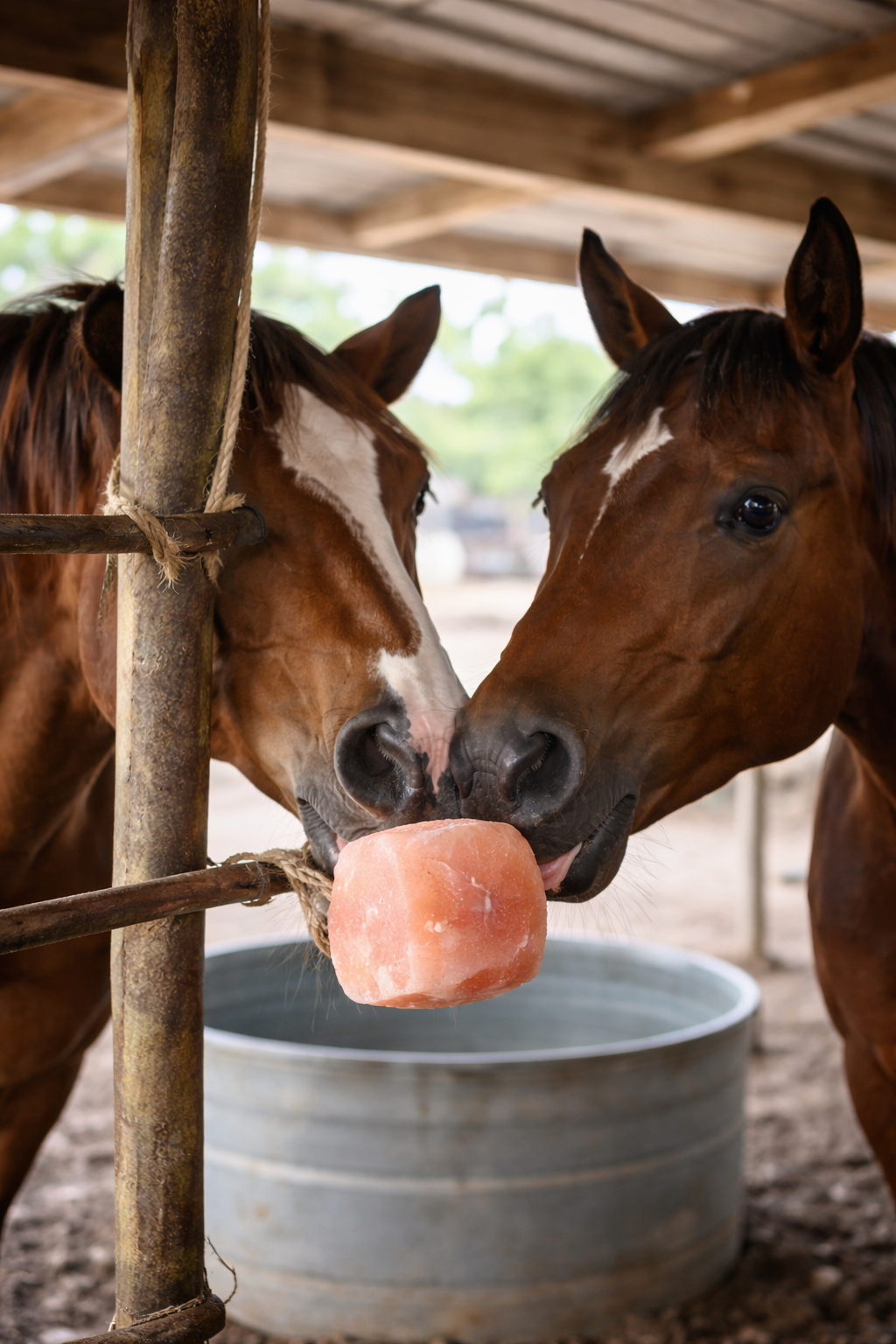
Horses are one of the few animals that sweat significantly, losing large amounts of sodium and chloride — the two most critical electrolytes — during exercise, hot weather, or stressful situations. Without adequate salt intake, horses can become lethargic, lose appetite, develop muscle cramps, and even experience serious neurological issues. A Himalayan salt lick is the most natural and effective way to ensure your horse always has access to the minerals it needs.
Why Natural Salt Licks Are Better Than Processed Blocks
Unlike compressed salt blocks that contain binding agents, artificial dyes, and chemical additives, natural Himalayan rock salt licks are 100% pure. They are hand-selected from ancient deposits formed over 250 million years ago in the Khewra Salt Mine, containing 84 naturally occurring trace minerals including calcium, magnesium, iron, potassium, and zinc. There is nothing added and nothing removed — just pure, ancient salt exactly as nature created it.
Self-Regulating Mineral Intake
One of the greatest benefits of a natural salt lick is that horses self-regulate their intake. The dense crystalline structure of natural rock salt means horses must work to lick what they need — they cannot bite off chunks or over-consume. This makes natural salt licks inherently safer than loose mineral supplements or softer processed blocks. Your horse will lick exactly as much as its body requires, no more and no less.
How to Get Started
Choose a salt lick size appropriate for your horse. A 1 KG lick is perfect for ponies and foals, a 2.5 KG lick suits most adult horses, and a 4 KG lick is ideal for large horses or multi-horse stalls. Hang the lick at a comfortable height using the attached rope, and make sure fresh water is always available nearby. Replace the lick when it becomes too small to hang safely. It really is that simple — and your horse will thank you for it.
Signs Your Horse Needs More Salt
Watch for excessive licking of surfaces like fences, walls, or soil. Reduced water intake, poor coat condition, and muscle stiffness after exercise can all indicate salt deficiency. During summer months and heavy training periods, your horse may consume salt more quickly, which is completely normal and healthy.